DiSSCo’s first “micro-changes” workshop
20 July 2021 More than 40 participants attended DiSSCo’s 1st “micro-changes” online workshop last July 8. The workshop was the...
20 July 2021 More than 40 participants attended DiSSCo’s 1st “micro-changes” online workshop last July 8. The workshop was the...

14 April 2021 Next week, the Research Data Alliance (RDA) 17th Virtual Plenary Meeting will host an interesting session...
13 April 2021 We are hiring! Naturalis is looking for a Lead Programmer for the development of DiSSCo Digital Specimen...
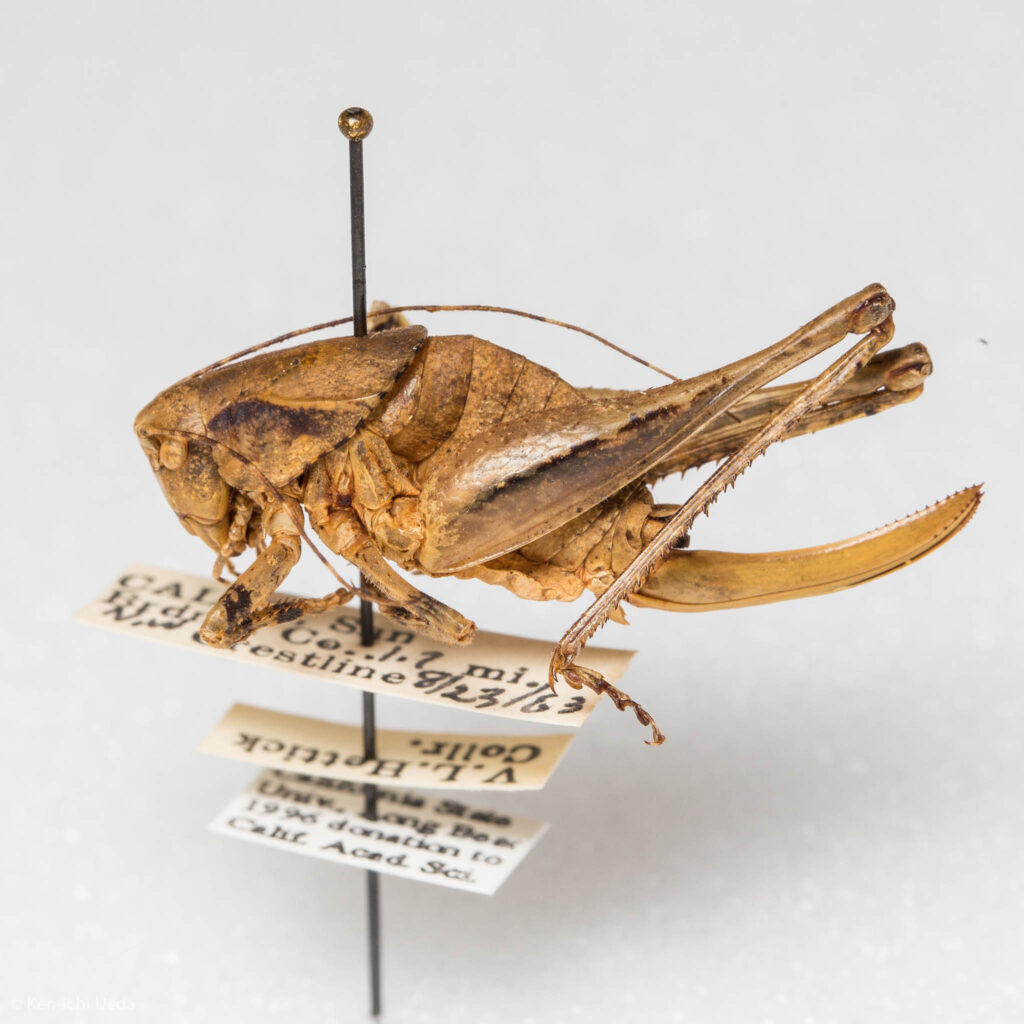
18 March 2021 SYNTHESYS+, one of the DiSSCo-linked projects, has just extended the deadline for its 3rd Transnational Access...
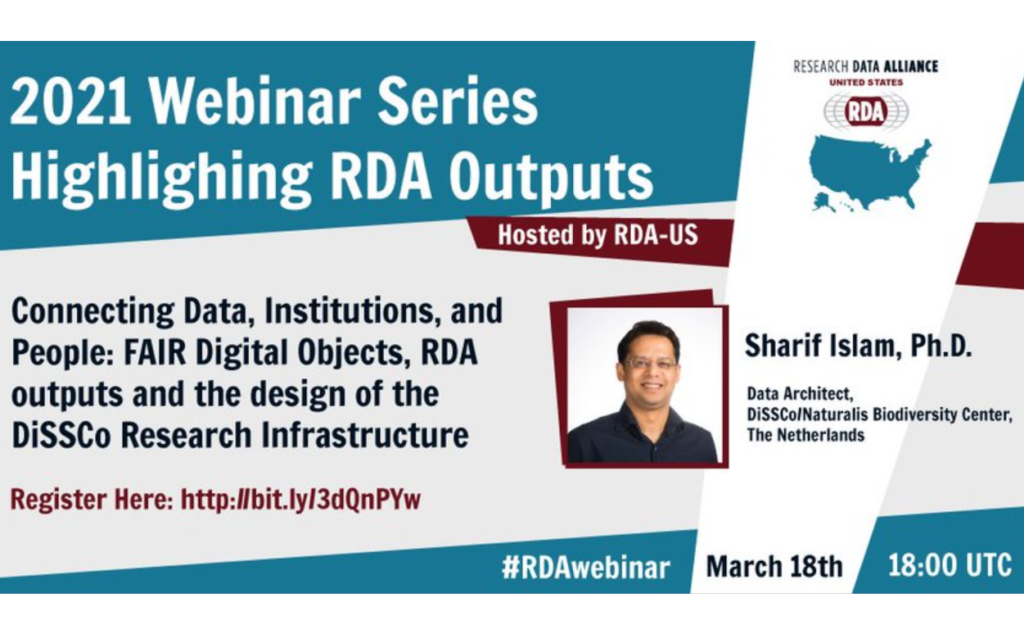
18 March 2021 Scroll down to watch the webinar “Connecting Data, Institutions and People: FAIR Digital Objects, RDA outputs...
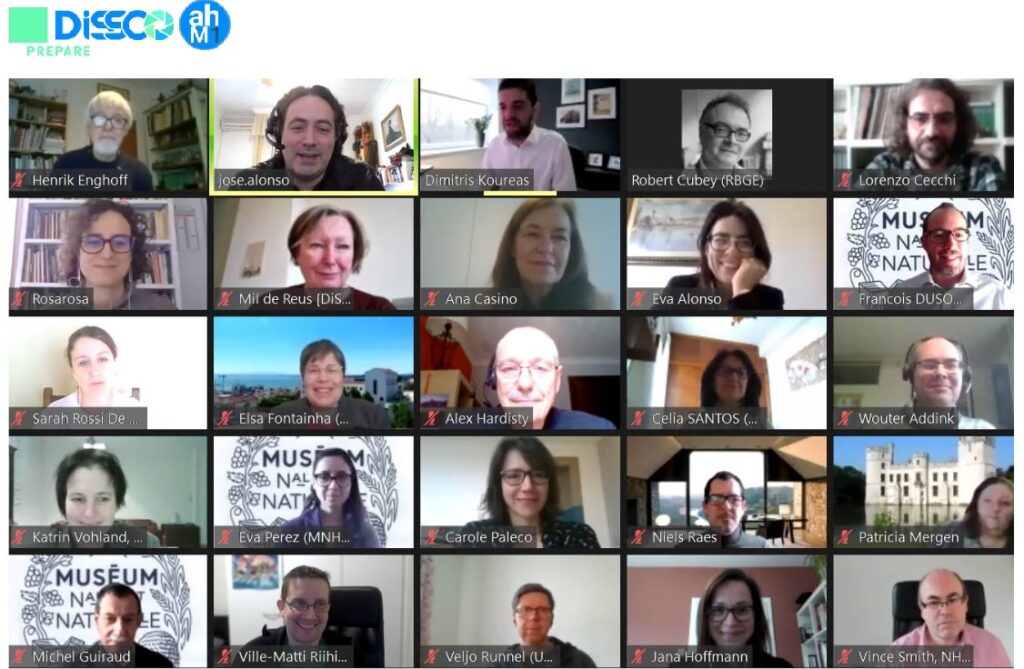
8 February 2021 DiSSCo’s first all-hands meeting (AHM1) took place last 18-22 January. The event was a great opportunity for...
27 January 2021 We are pleased to announce a community consultation on the convergence of DiSSCo’s digital specimen and BCoN’s...
19 January 2021 Less than a week ago, we had the pleasure of welcoming more than 65 experts from all over the world to...
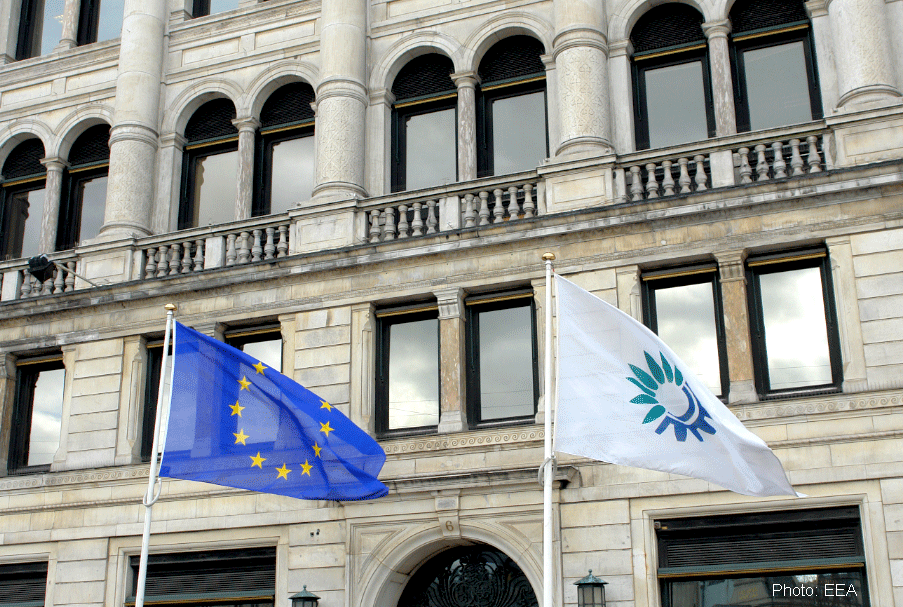
30 December 2020 Connecting the European Environment Agency (EEA) and DiSSCo could bring about significant improvements to...
9 December 2020 Biodiversity Next is the shiny brand new winner in the Best New Conference or Event category at the...
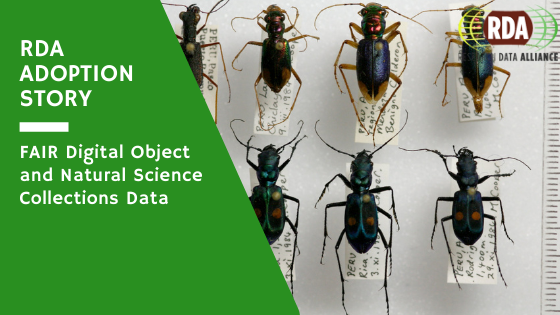
One of the key elements of DiSSCo’s data infrastructure design is the ‘Digital Specimen’ — a FAIR Digital Object acting as a digital representation on the Internet for a specific physical specimen in a collection. The ideas for the Digital Object as an element in a data infrastructure was proposed in the output on virtual layer recommendations by the Data Fabric IG and in the basic vocabulary from the Data Foundation and Terminology WG.
The Natural History Museum’s informatics group are leading members of a series of European Commission (EC) funded digital projects working to transform the operation of European natural science collections. These multi-million Euro international initiatives bring together the collections of 115 institutions across 15 countries, representing over one billion scientific specimens and more than 5,000 scientists.
News

News
News
News
News