
4 November 2026
Text by DiSSCo CSO
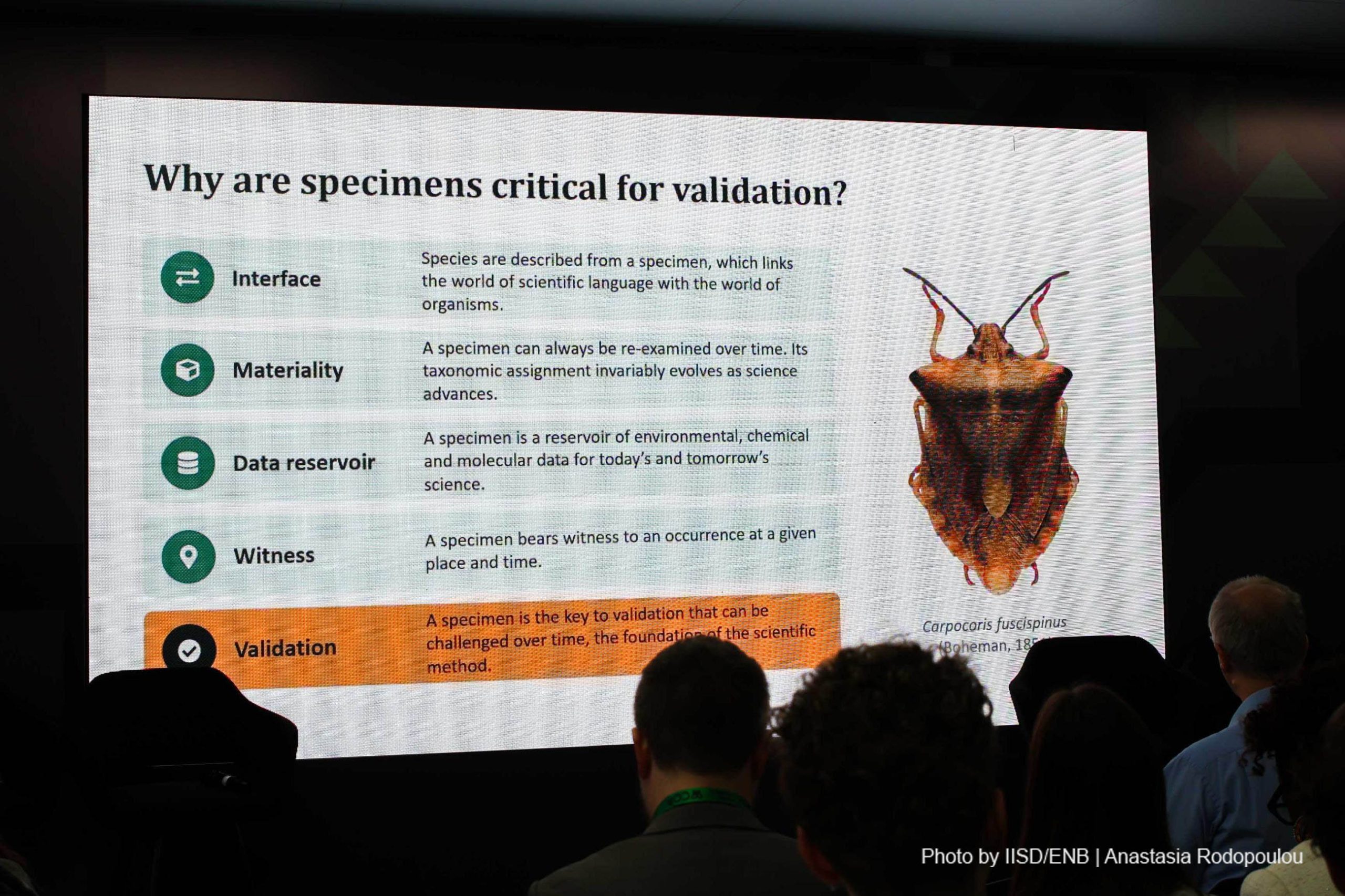
At COP17, the DiSSCo community made the case for data validation as an indispensable requisite for the effective measurement of the Kunming-Montreal Global Biodiversity Framework (KMGBF) targets.
Here is a brief report of the side event hosted during COP17 where Natural science collections made the case for their taxonomic expertise being the bedrock for validating the data streams required by the GBF monitoring framework, and placing data validation infrastructures at the centre of KMGBF indicator delivery, regionally and globally.
Side Event
Natural Science Collections: Ensuring Data Quality
Date / Location: 29 October 2026 – 16.30 to 17.45 – IUCN Pavilion
Organisers: Naturalis Biodiversity Center, CETAF, Senckenberg Naturforschung, Natural History Museum London, Muséum National d’Histoire Naturelle, Denmark Natural History Museum, Museum für Naturkunde.
COP17
The COP17 conference (Yerevan, Armenia, 19–30 October 2026) allowed for the first global review of collective progress in implementing the Kunming–Montreal Global Biodiversity Framework (GBF) for reversing global biodiversity loss by 2030. COP17 has provided an opportunity to monitor progress on specific targets, identify remaining gaps, and consider how implementation can be accelerated to ensure that the GBF’s ambition remains within reach.
The DiSSCo community, represented at the event by CETAF and some of our member institutions, seized the opportunity provided by COP17 to showcase how critically natural history collections can contribute to the implementation and monitoring of the GBF’s targets, helping to translate global biodiversity ambitions into effective, evidence-based actions.
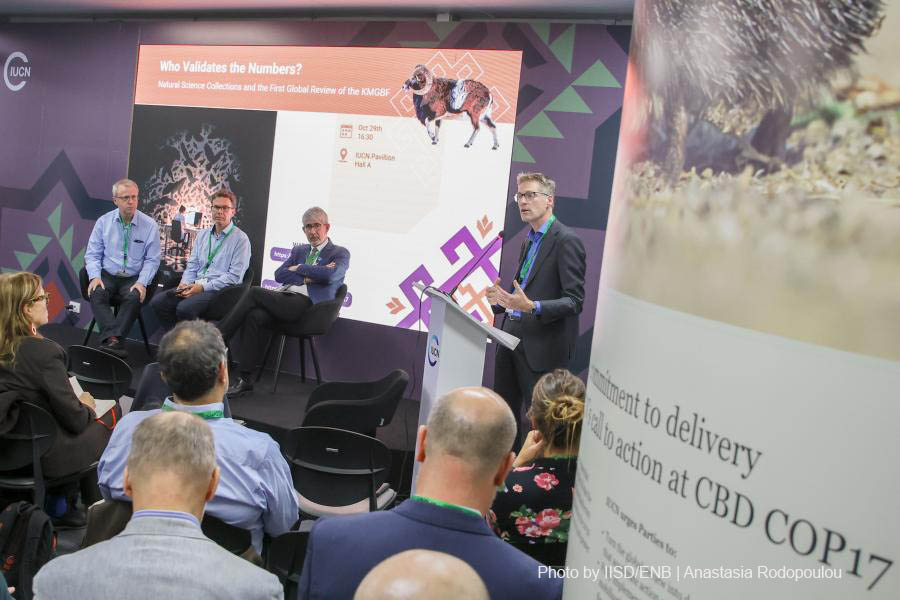
Image: Marcel Beukeboom, Director General, Naturalis Biodiversity Center (Netherlands)
Key messages
The taxonomic community went to COP17 with a set of clear messages:
Volumen is not evidence: Sensors, eDNA and AI multiply the velocity of biodiversity data, but only interoperable, validated data can inform policy.
Collections anchor the indicators: Integrative taxonomy, reference specimens, and federated databases tie new data streams to authoritative names and curated baselines.
A distributed global mechanism: Regional data are validated against shared global references, with locally led monitoring under the FAIR and CARE principles.
Policy already demands it: Both the G20 Mpumalanga Roadmap and the EU Nature Restoration Regulation and Pollinator Monitoring Scheme call for validated evidence.
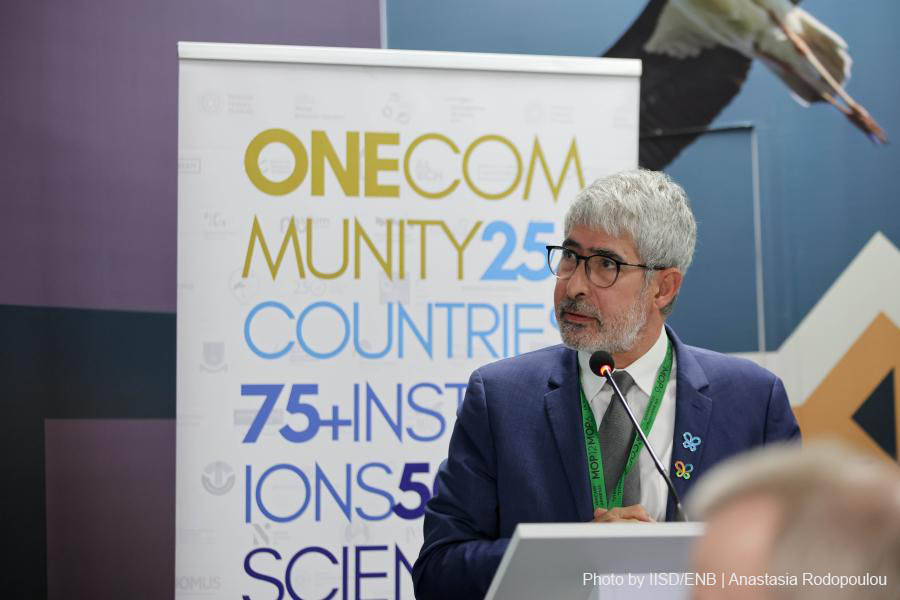
Image: Gilles Bloch, President, National Museum of Natural History (France)
Read the full ENB report
The Earth Negotiations Bulletin has published a talk-by-talk summary of the side event. You can access it by clicking on the button below.
Do you want to know more about the technical side of DiSSCo? DiSSCo puts different technical knowledge platforms at the scientific community’s disposal:
DiSSCoTech: Get the latest technical posts about the design of DiSSCo’s Infrastructure
DiSSCo GitHub: Code hosting for DiSSCo software, version control and collaboration
DiSSCo Modelling Framework: A WikiBase tool that is configured to create an abstraction of the DiSSCo data model