
8 December 2025
For several years now, DiSSCo has promised a true digital transformation for natural history collections (NHCs). Now, some of the core services and developments of the future Research Infrastructure have reached the level of maturity necessary to demonstrate the feasibility of such a transformation. The series of posts about DiSSCo applications aims to introduce some of the developments that are already making a difference for biodiversity research and collection management.
ELViS
Currently, the way researchers and collection managers request and access specimens across institutions is fragmented, with each collection having its own entry point and protocols. This leads to systemic issues such as unequal visibility of collections, administrative overload, difficulties for multi-institution requests, and underutilisation of specimens.
Andres Rivera (center), researcher at Naturalis and a member of DiSSCo users group.
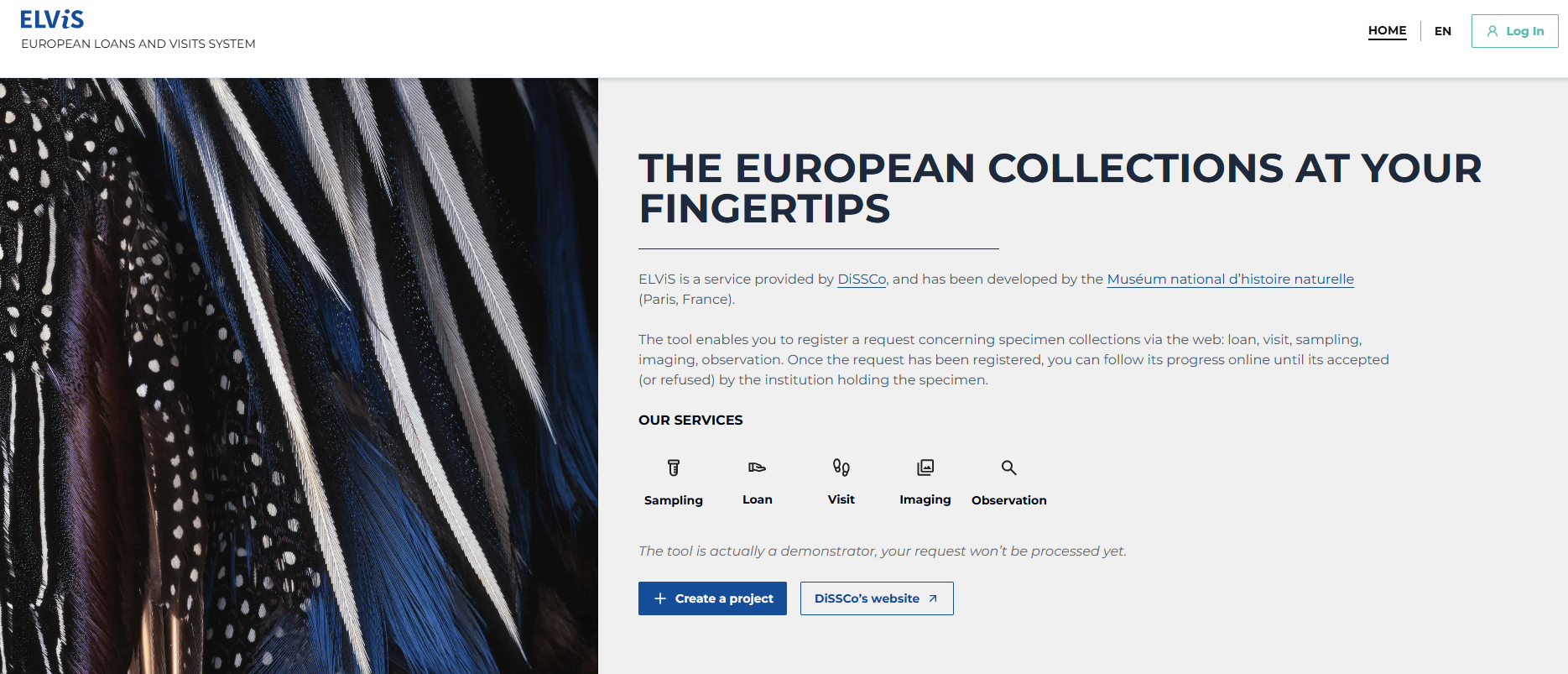
ELVIS was designed to solve these problems by providing a single, unified entry point linked directly to DiSSCo data, enabling standardised practices across institutions, better discoverability, and full traceability of request workflows. The system supports high request volumes, allows multi-collection and multi-needs requests, and adapts to each institution’s organisational structure. The platform also centralises communication through built-in chat tools to avoid scattered emails or phone calls.
Unfortunately, the ELViS demonstrator is currently experiencing technical difficulties, but below is an updated demo of the service, including how applications can create a project, select collections, upload documents, and add digitally identified or non-digitised specimens. The system handles loans, visits, sampling, imaging, and more. Managers can assign specimens, validate requests, add or modify specimen lists, and generate pre-filled administrative documents such as packing lists. ELVIS also tracks returns, publications, and unresolved items before a request can be closed. Additional features include advanced search, statistics, data export, and customizable user management.
Do you want to know more about the technical side of DiSSCo? DiSSCo puts different technical knowledge platforms at the scientific community’s disposal:
DiSSCoTech: Get the latest technical posts about the design of DiSSCo’s Infrastructure
DiSSCo GitHub: Code hosting for DiSSCo software, version control and collaboration
DiSSCo Modelling Framework: A WikiBase tool that is configured to create an abstraction of the DiSSCo data model